On May 4th, 2018, British indie rock band Florence + the Machine released the single “Hunger” as a taste of its upcoming album, High as Hope. The band’s eponymous, whimsical lead singer, Florence Welch, wrote the stunning lyrics as a personal poem, and the contrast between their raw darkness and the dance-ability of the music gives this track its Anthem status. Anyone with an inkling of an ache for something in their heart will feel this song, but it particularly stands out for those in recovery from eating disorders or drug abuse as Florence directly addresses her battles with both. For this article, I want to appreciate the bold and piercing opening lines of the song that fills the pre-chorus and chorus with so much exhilaration. After several lilting ooo, ooo, oooooo’s, Florence’s clear, full soprano voice comes in with the words,
At 17 I started to starve myself
I thought that love was a kind of emptiness
At least I understood, then, the hunger I felt
And I didn’t have to call it loneliness
We all have a hunger
The instruments pick melodic harmonies sparsely, and the full band comes in full swing on the line, We all have a hunger. One of my favorite things about this song is Florence’s negotiation between revealing the quieter, more hidden parts of herself in the verses and enveloping her audience with empathetic connection in the chorus. The confessional aspects of her lyrics resound with anyone who directly struggles with an eating disorder. Although some may criticize her for commodifying or monetizing this mental illness, Florence is clearly expressing inner demons through intimately personal art; it happened to turn into a hit song with the help of her sonorous vocals and a killer beat. I’ve personally gone through phases of listening to the first verse – first post-chorus ten times in a row when I’ve needed it most.
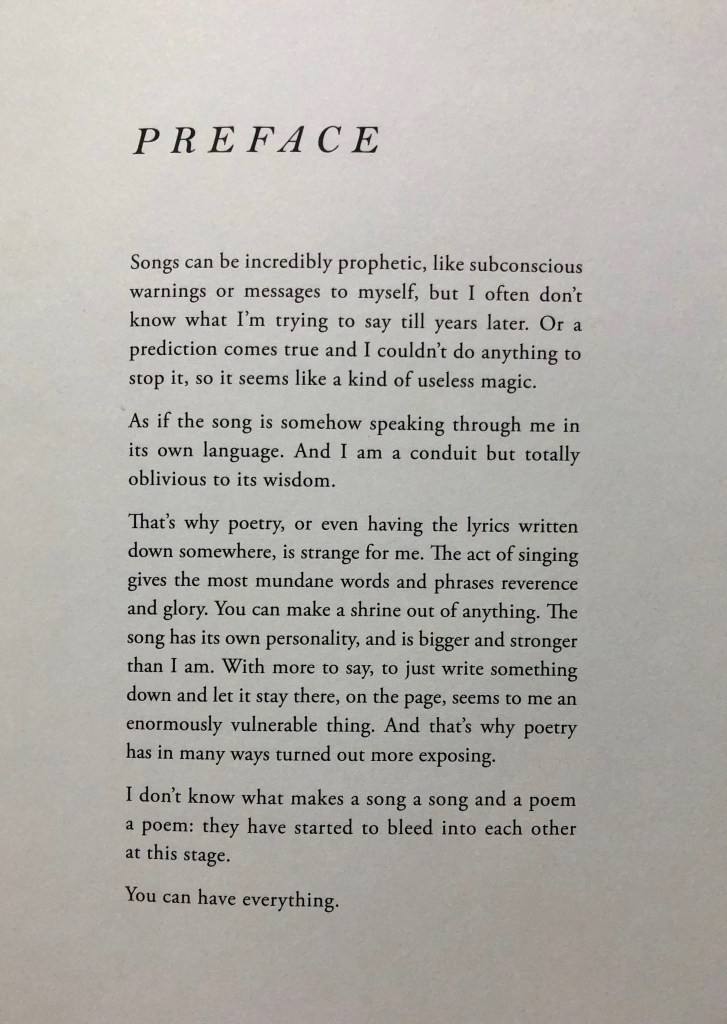
After releasing “Hunger”, Welch posted on her Facebook page, “This song was never meant to be a song, it was a poem written in an effort to understand the ways I looked for love in things that were not love. I was never thinking it would be a song but maybe that’s the point. And by singing it out loud, together we become a choir, a chorus higher than the hurt, louder than loneliness.” As if Florence has taken up arms against the very concept of loneliness, I have found myself belting every single word to this song, which peaked at #1 on the Billboard Charts in June 2018, along with friends countless times since it was released. I actually didn’t realize how popular it had gotten on mainstream charts until I started hearing it in Starbucks. Florence + the Machine did, in fact, create their own choir willing to sing these brave lyrics too. One critic wrote an album review for Pitchfork stating that, “verses stumble aimlessly around choruses to the point where three-and-a-half-minute songs like “Hunger” feel twice their length. At times they don’t seem like songs, perhaps since some weren’t supposed to be: “Hunger,” according to Welch, was conceived as a poem, perhaps one meant for her forthcoming Useless Magic collection. This explains a lot.” In fact, I think this ‘stumbling’ around the chorus by way of the pre and post choruses actually strengthens the pace of the song. Each unique verse bounces off of the poetic pre and post choruses, which bracket the emphatic chorus that belts over and over again, We all have a hunger.
When Florence poignantly writes that she thought love was emptiness, she speaks to all those who physically could only find a false sense of self love when their stomachs were empty. Anorexia (and other restrictive food intake disorders) is a mental illness which can be characterized by the cutting off of one’s appetite, and one of the major symptoms can be social isolation as a result of not wanting to eat. It is a secretive and insidious disease that leads to a subconscious loneliness often unknown to the sufferer, which Florence underscores in her lyrics. I love how, in her interview for the New York Times, there is a note that reads: “Ms. Welch declined to go into greater detail about her eating disorder, for fear that others would model themselves after her. “When I was in it, I was always, like, hunting for information,” she said. “I want to be responsible.”’ The reality is that many widespread platforms of social media are helping perpetuate diet-obsessed culture. According to The Guardian, “Research conducted… by Jennifer Grygiel, a social media expert and assistant professor of communications at Syracuse University, showed there were 3.4m images and posts under terms “anorexia” or “thinspiration” over the past year. This included 13,700 on Facebook, 2.1m on Twitter and 560,000 Instagram posts.” This song does a wonderful job of addressing restrictive eating without glorifying it in any way. With Florence’s superstardom, she rightfully bears the responsibility of stating that she thought love was emptiness, and now sees that it’s the opposite.
While I don’t want to try to psychoanalyze Florence Welch on the intentionally little information she has publicly shared, it’s important to note that this song’s authenticity comes from its creator’s genuine struggles. Florence has openly discussed that she feels with a depth and zeal that she has found often unparalleled to others in her life. Her disposition towards dramatic moods could be considered emotional fullness, which is a term that describes a lack of appetite when there are too many emotional factors overwhelming an individual’s life. Carrying emotional baggage with little support to unpack it can lead to the suppression of hunger cues. In the “Hunger” music video, Florence lets loose, dancing in her signature ethereally volatile fashion, which is interspersed with the journey of a lifeless statue becoming more organic as it interacts with vibrant individuals. While seventeen-year-old Florence must have suffered, her present self blazes with the passion of being her own muse, and this song ignites the same passion that, unfortunately, we all suffer, but thank god we are never alone.
In an interview with BBC Radio 1, Florence summarized the bittersweet euphoria that ‘Hunger’ leaves us with: “This song was kind of about what is it that I’m, we’re actually looking for, and I quite like the idea of putting like a big, probably unanswerable spiritual question in a pop song, because it might not be able to be answered but we can dance about it.” Her words also pinpoint exactly what Anthem is about: exploring gritty, real songs that bring people together to dance in the rain. We do all have a hunger, and music can be a sublime way to fill us up.
 Anthem